
Most operators do not lose revenue because the register fails in isolation. They lose revenue because payments, connectivity, peripherals, failover posture, installation quality, and location operations are not governed together as one environment.
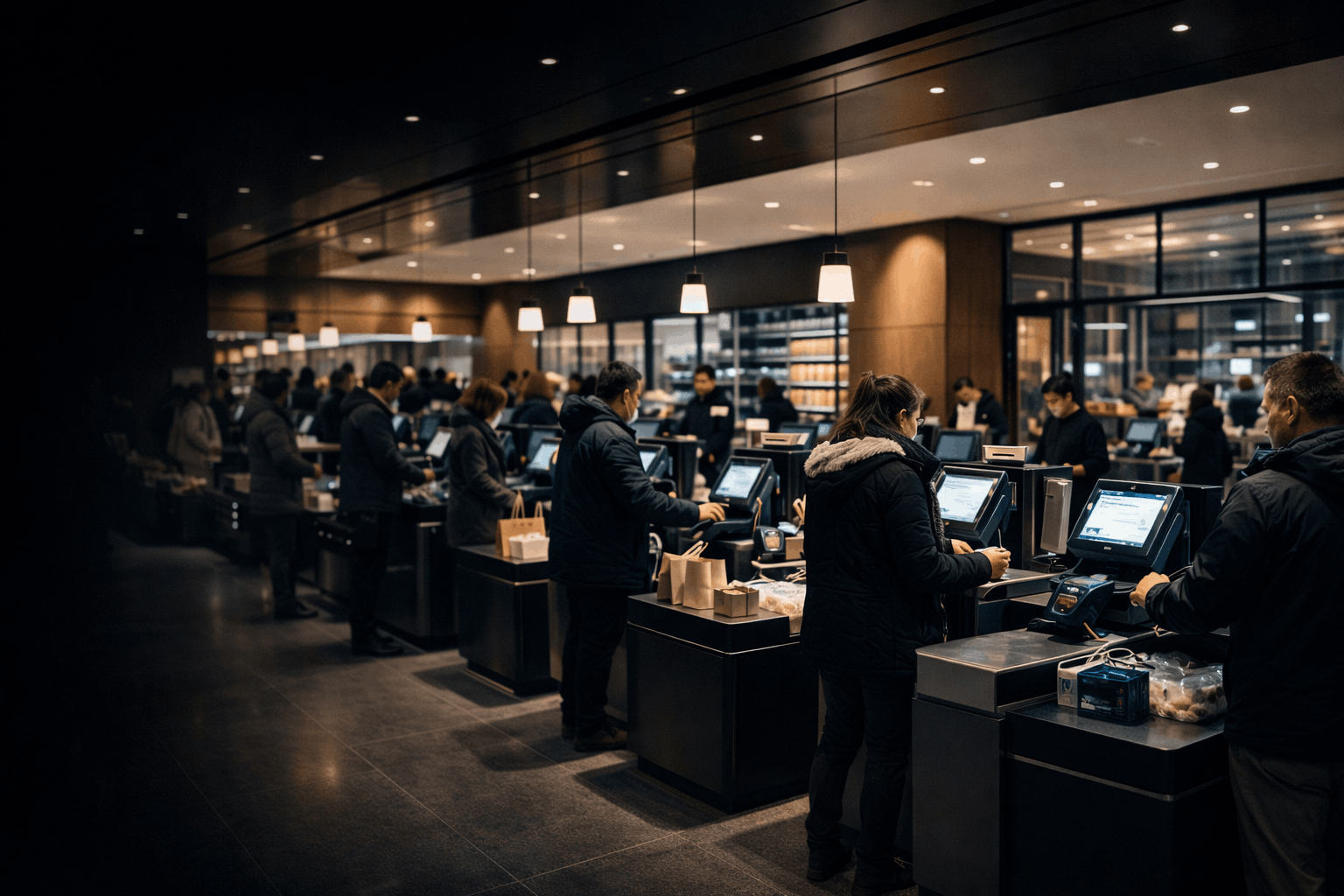
Commerce Infrastructure
Protect the transaction path. Standardize the revenue environment.
POS, payments, connectivity, device readiness, and location-level continuity governed as one operating layer.
Retail payment infrastructure governed for multi-location transaction continuity, commerce infrastructure control, and cleaner revenue resilience.
Why Commerce Infrastructure Matters
The transaction environment is only as strong as the infrastructure beneath it.
When those layers drift apart, the revenue path becomes fragile. RetailBox Commerce Infrastructure replaces that fragmentation with a disciplined, resilient operating model built to protect continuity from first swipe to final settlement.
Retail Payment Infrastructure
Retail payment infrastructure for multi-location environments
RetailBox delivers retail payment infrastructure as one governed revenue model rather than a series of disconnected POS decisions, local payment fixes, unmanaged device dependencies, and site-by-site workarounds across the footprint.
It works with The Standard to establish the baseline, with Control Plane to help govern continuity and visibility across the fleet, and with Connectivity and Security to support the layers that keep the transaction path stable under real operating conditions.
Site Rollouts activates commerce environments in the field, while Managed NOC helps sustain uptime, validation discipline, and ongoing operational support after activation.
Operating Logic
Commerce built to keep the revenue path live.
Align the commerce platform, payment flow, and location environment through one repeatable operating model.
Transaction Flow
Align POS execution, payments capability, settlement flow, and device readiness so checkout operates inside a dependable, governable revenue environment.
This protects the path from first swipe to final settlement and reduces avoidable transaction disruption.
Environment Readiness
Bring connectivity, secure edge controls, LAN and Wi-Fi readiness, peripherals, and installation quality into one coordinated deployment posture around the commerce workflow.
This creates a cleaner day-one baseline for checkout reliability and ongoing operational support.
Governed Continuity
Govern the revenue environment as one operating layer so payments, hardware, connectivity, cutover, validation, and location support do not drift into fragmented decisions over time.
This supports stronger multi-location consistency, lower operational fragility, and a more resilient commerce posture across the fleet.
Architecture
Commerce runs on the rest of the stack.
Lightspeed powers the commerce workflow, payment capability, and platform-level product support. RetailBox deploys and governs the environment that keeps it live—covering connectivity, secure edge controls, LAN and Wi-Fi readiness, hardware and peripherals, installation, cutover, validation, and location-level continuity.
The revenue path should not operate across flat, loosely managed local networks. It should run inside a segmented, governable, and better-supported location architecture designed for transaction continuity.
RetailBox Commerce Infrastructure turns commerce from a software event into a governed operating layer built for revenue continuity, location-level control, and more disciplined multi-location execution.
01
Revenue Continuity
A governed commerce environment protects the transaction path by aligning payments, connectivity, devices, and location readiness inside one resilient operating model.
02
Deployment Discipline
Commerce performs more consistently when terminals, peripherals, networking, installation, cutover, and validation are deployed through one coordinated location model.
Governed Revenue Operations
A more resilient commerce environment across the fleet.
Retail payment infrastructure performs better when transaction flow, environment readiness, governed continuity, and ongoing support are aligned as one revenue model instead of managed as separate exceptions.
That gives operators a cleaner path to revenue continuity, stronger resilience under disruption, and more supportable commerce operations as the footprint grows.
That makes retail payment infrastructure easier to standardize, easier to support, and easier to scale across every location in the portfolio.
